“It’s also the struggle to end poverty, inequity, unsafe housing, discrimination and stigma, and to extend social protection and universal health coverage. If the [COVID-19] pandemic has taught us anything, it’s that health is a human right, not a luxury for those who can afford it.”
– Dr. Tedros Adhanom Ghebreyesus, Director-General of World Health Organization.
The capabilities approach aims to facilitate a person’s development of capabilities that enable them to address issues such as TB and ultimately flourish as people and societies.
Tuberculosis, commonly known as TB, is a disease that affects 23% of the global population[1], with roughly 1.5 million people dying from the disease in 2020. It is currently the 13th leading cause of death worldwide and the second leading infectious killer after COVID-19 (above HIV/AIDS)[2]. While anyone can contract TB, this is overwhelmingly a disease of the poor. Poverty places individuals at greater risk of dying from tuberculosis. People who are poor often have little to no access to primary care to address the disease. People who are poor often live in shared dwellings or crowded places which can increase transmission. People who are poor often struggle with hunger and malnutrition which can reduce their ability to fight the disease. But what also puts people who are poor at greater risk is the lack of commitment by affluent societies to fund efforts to eradicate this disease.
Investments in TB prevention, diagnosis, and care for tuberculosis in low- and middle-income countries (LMICs), accounting for 98% of reported TB cases, fall far short of what is needed. Less than half (41%) of the global TB funding target is available, leaving a US$ 7.7 funding gap in 2020 to achieve global targets[3]. In addition to this, individuals, communities, countries that suffer from higher levels of poverty also, overwhelmingly lack contexts that enable one to develop capabilities to address this disease burden themselves, as in example, health literacy. The scenario of TB burden for refugees and asylum seekers worldwide poses a greater risk given the lack of political representation, among other salient human rights. Refugees and asylum seekers may have a significant burden of infectious diseases, such as tuberculosis, as a result of the prevalence of such diseases in their country of origin and of exposure to adverse conditions during migration and after arrival at the host country[4].
In Jordan, for example, which is currently home to some 650,000 Syrian refugees, of which, a large portion live outside the formal camps in urban areas. The monthly cost for MDRTB drugs is some US$2,820 dollars[5], more than ten times the cost of first-line drugs for a simple TB case. Those 6500,000 Syrians in Jordan are part of a larger refugee community of some 3.2 million people spread out across the region, most of whom have little to no access to treatment for the highly contagious and highly infectious TB, to say nothing of its more stubborn drug-resistant counterpart.
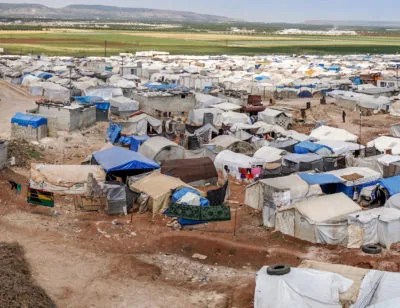
Jordan, an upper-middle-income country in the Middle East, has been receiving Syrian refugees since 2012, today Jordan is home of approximately 1.4 million Syrians that live in formal and informal refugee camps, Zaatari, Mrajeeb Al Fhood, and Al Azraq camps. There are other settlements across the Jordanian territory and around 90% of Syrians do not live in formalized camps, making health care inaccessible and difficult to assess disease outbreaks and health needs.
In an effort to take some of the pressure off the already stretched health systems in these refugee -receiving countries (Turkey, Lebanon, Egypt, and Jordan), the Global Fund approved emergency assistance in 2014 worth some $3.3 million to help Lebanon and Jordan respond to the increased TB burden among Syrian refugees. However, the funds available for the response to the disease is not adequate, and the Jordanian government still faces real challenges for the control and prevision of the TB. In the formal and informal settlements of Syrian in Jordan, it is estimated that TB incidence has reached 48 per 100,000 people[6]. An additional fact impacting the burden of disease and the increasing TB spread is that many of these refugees who did not registered with Jordanian authorities upon entry into the country, or left the camps without prior approval, are prevented from accessing public health care subsidies and humanitarian assistance.
Building Capabilities is developing a coalition of multidisciplinary stakeholders within Jordan to conduct a nation-wise assessment of TB epidemiological surveillance capacity. The assessment of needs will inform the level of support required from Jordanian government and other international organizations and stakeholders needed to provide effective control and prevention of TB among Jordanian population and Syrian refugees residing in the country in formal and informal refugee camps. A final aim of this project is to be able to align needs with funding sources that can address the various financial needs identified and to build in country capacity to respond to TB eradication efforts.
[1] Houben R, Dodd P. The global burden of latent tuberculosis infection: a re-estimation using mathematical Modelling. PLoS Med. 2016;13:10

[2] World Health Organization Global tuberculosis report 2021

[3] World Health Organization Global tuberculosis report 2021

[4]  Proença, R., Mattos Souza, F., Lisboa Bastos, M. et al. Active and latent tuberculosis in refugees and asylum seekers: a systematic review and meta-analysis. BMC Public Health 20, 838 (2020).

[5] Aidspan Regional Report- The Global Fund in the MENA Region-

[6] Global Fund – Jordan Country Overview
Donations on this site are tax-deductible to the extent allowed by the law. Building Capabilities is a U.S. nonprofit tax exempt charitable organization (TAX Identification number 87-2695234) under Section 501 (c)(3) of the U.S. Internal Revenue Code.
 Building Capabilities